
JXKELLEY:2026 Top Ceramic Balls Manufacturers for Global Buyers?
Oct 24, 2026
Pingxiang, Jiangxi Oct 23, 2026 (Issuewire.com) - Ceramic Balls are becoming strategic components in demanding industrial systems, not merely precision fillers or bearing elements. Global buyers now evaluate alumina, zirconia, silicon nitride, and hybrid grades by application. Their choices affect wear life, contamination control, thermal stability, and operating costs. Grand View Research's Ceramic Balls Market report identifies expanding demand across chemical processing, oil and gas, electronics, and advanced manufacturing. Its findings support a practical view: material selection must follow operating conditions, not catalog popularity.
Performance matters.
The 2026 manufacturer landscape should therefore examine more than production volume. Buyers need evidence of dimensional control, crush strength, surface finish, porosity, and batch consistency. MarketsandMarkets' Advanced Ceramics Market analysis highlights growing industrial adoption of engineered ceramics, driven by high-temperature performance and corrosion resistance. Meanwhile, Fortune Business Insights' ceramic materials research points to continued demand from energy, electronics, and medical technology applications. These reports do not make every supplier reliable. They provide useful market context, not purchasing approval.
This guide compares leading Ceramic Balls manufacturers through technical capability, quality systems, customization, export experience, and after-sales support. Relevant evidence may include ISO 9001 certification, ASTM or equivalent testing, lot traceability, inspection reports, and representative samples. A supplier offering 1.0-millimeter zirconia balls may not suit a refinery requiring large alumina catalyst supports. Small details matter. Buyers should also verify lead times, packaging integrity, minimum order quantities, and documentation for their destination market. No ranking is universally correct. That is an important limitation. The strongest choice depends on media chemistry, temperature, load, equipment design, and total lifecycle cost.
What Ceramic Balls Are and Their Main Industrial Applications
2026 Top Ceramic Balls Manufacturers for Global Buyers?
What Ceramic Balls Are and Their Main Industrial Applications
Ceramic balls are precision-made spheres formed from alumina, zirconia, silicon nitride, silicon carbide, or steatite. Their low friction, hardness, and thermal stability support demanding industrial work. A 2024 Grand View Research assessment valued the global advanced ceramics market at approximately USD 96 billion in 2023. It also projected growth of about 5.5% annually through 2030. Market boundaries differ, however. That number should not be treated as a ceramic-ball figure.
In petroleum refining and chemical processing, ceramic balls support catalyst beds and improve gas or liquid distribution. Their rounded shape reduces pressure loss inside packed columns. In mills, dense alumina and zirconia balls grind minerals, pigments, and technical powders. Silicon nitride balls also serve in high-speed bearings, where steel may corrode or expand excessively. Thermal systems use ceramic spheres for heat storage and controlled airflow. The U.S. Geological Survey reported global alumina production near 144 million metric tons in 2024, showing the scale of a key ceramic feedstock.
Tips: Match the ball material to temperature, load, chemical exposure, and impact strength. Check diameter tolerance, apparent density, crush strength, and surface defects. A cheaper ball can produce more dust. That is often overlooked. Reports from different agencies also use different definitions, so buyers should verify test methods before comparing suppliers.
How to Evaluate Ceramic Ball Manufacturers in 2026
Evaluating ceramic ball manufacturers in 2026 requires more than comparing prices. A reliable supplier should provide clear material grades, production tolerances, density data, and crushing strength. Ask how these values are tested and recorded. Vague answers deserve caution. Product consistency matters because small diameter changes can affect flow, pressure drop, and reactor performance. Request samples from a normal production batch, not only specially selected pieces. Examine surface cracks, roundness, dust, and packaging damage. A useful supplier can explain each defect limit in practical terms.
Tips: Check certificates, test reports, and batch traceability. Confirm whether an independent laboratory can verify key results. Review the manufacturer's quality system, inspection equipment, and handling procedures. Ask for references from similar applications, while remembering that confidential customer claims are difficult to verify. A factory visit or live video inspection can reveal storage conditions, calibration habits, and actual production capacity. These details often matter more than attractive catalog images.
Do not judge technical expertise from polished language alone. Compare three samples under the same test conditions, including abrasion, thermal cycling, or chemical exposure when relevant. Confirm lead times, replacement policies, export packaging, and communication during defects. A low initial price may hide higher replacement costs. No checklist is perfect. I would still keep a written risk record, because supplier performance can change after a successful first order. The strongest manufacturer is not always the largest; it is the one that measures honestly and responds clearly when results fall short.
Global buyers need more than a low quotation when selecting ceramic ball manufacturers for 2026. Performance depends on purity, hardness, porosity, dimensional tolerance, and batch consistency. Grand View Research's 2024 advanced ceramics report forecasts steady market growth through 2030, supported by chemical processing, filtration, and industrial equipment demand. This growth is creating more suppliers, but not all production systems offer equal control.
Ask for recent test records, not attractive brochures. Verify alumina or zirconia content, crushing strength, water absorption, and size distribution. ISO 9001 certification supports process discipline, yet it does not prove product performance. A serious manufacturer should provide samples, inspection methods, and traceability from powder mixing to final firing. Short documents are not enough.
Check the details.
For high-temperature applications, compare thermal-shock data and furnace uniformity. For grinding or catalyst support, inspect wear loss and surface defects under magnification. The MarketsandMarkets ceramic balls analysis reports a mid-single-digit growth outlook, but market expansion may encourage rushed capacity increases. That risk deserves attention. In my experience, buyers often overvalue unit price and undervalue replacement frequency. I may be wrong on one point: laboratory results can still miss real operating conditions. Therefore, request a small production trial, repeat testing after shipment, and clarify packaging, moisture protection, and export documentation before approving a long-term order.
How Ceramic Ball Quality, Certifications, and Capacity Compare
2026 Top Ceramic Balls Manufacturers for Global Buyers
Ceramic ball quality starts with raw material control, not polished packaging. Buyers should examine purity, density, hardness, and dimensional tolerance. A reliable manufacturer can provide batch records and recent laboratory reports. Ask for samples from different production lots. One sample proves very little.
Alumina, zirconia, and silicon nitride balls serve different operating conditions. Alumina suits many wear-resistant applications and offers practical cost control. Zirconia provides higher toughness in demanding environments. Silicon nitride performs well where low weight and thermal stability matter. Quality comparisons should include surface finish, crushing strength, and contamination risk.
Certifications also require careful reading. ISO 9001 can indicate controlled processes, but it does not guarantee every ball meets your specification. Request certificates, test methods, calibration records, and traceability documents. Check whether reports match the actual factory and product grade. Capacity matters too. A supplier may quote impressive annual output, yet struggle with a sudden custom order. Review furnace size, inspection equipment, lead times, and backup production lines. Factory audits reveal details photographs often miss, such as dusty packing areas or inconsistent labeling. My own view is slightly cautious: even strong documentation can hide process variation. Independent testing remains worthwhile for critical applications. Small differences in roundness can affect flow, sealing, or grinding performance. Global buyers should compare verified evidence, not attractive claims.
How to Choose and Source the Right Ceramic Ball Supplier
Choosing the right ceramic ball supplier in 2026 requires more than comparing prices. Define the application first: grinding, catalyst support, flow control, or precision bearings. Specify material, diameter, density, hardness, porosity, roundness, and tolerance. ISO 3290-1 can guide requirements for ceramic bearing balls. For broader quality control, the ISO Survey 2023 recorded more than 1.2 million ISO 9001 certificates worldwide. Certification helps, but it does not replace production evidence.
Request a recent certificate of analysis, batch traceability, inspection records, and sample data. Check whether the supplier measures roundness, surface defects, crushing strength, and wear loss with calibrated equipment. USGS Mineral Commodity Summaries 2025 estimates global alumina output at roughly 143 million metric tons in 2024. Large raw-material supply does not guarantee consistent finished balls. Ask about powder grade, forming method, sintering temperature, and lot-to-lot variation. A polished sample can still hide weak internal control.
Tips: Start with a small trial order. Test it under real temperature, load, and chemical conditions. Ask for three consecutive batch reports, not one attractive result. Confirm packaging, moisture protection, labeling, lead time, and export documents in writing. Include an agreed rejection process. Small defects matter. Also, avoid choosing solely by the lowest quotation; that shortcut may create higher replacement and downtime costs. Supplier audits are useful, but independent testing remains wiser for critical applications.
Conclusion
This guide explains what Ceramic Balls are, how they are produced, and why they are used in industries such as chemical processing, petrochemicals, water treatment, mining, energy, and advanced manufacturing. It outlines the main product types, including inert support balls, grinding media, and specialized ceramic components, while highlighting the importance of material composition, size accuracy, strength, wear resistance, thermal stability, and chemical compatibility.
For global buyers, the article presents a practical framework for evaluating manufacturers in 2026. It compares suppliers according to product quality, testing procedures, certifications, production capacity, customization capabilities, lead times, packaging, export experience, and customer support. It also explains how to identify the most suitable supplier by matching technical requirements, operating conditions, budget, order volume, and quality expectations. The goal is to help purchasers make informed sourcing decisions and establish reliable, transparent, and long-term supply relationships.
Who are we?
Jiangxi Kelley Chemical Packing Co., Ltd. is a modern science and technology enterprise integrating research, development, design, production, and installation. In 2020, it invested in the construction of a new 5G intelligent manufacturing technology plant (AITE). The plant will have a production capacity of 300,000 cubic meters and an output volume of RMB 1 billion.
Experience Jiangxi Kelley Chemical Packing Co., Ltd. was founded in 2009, which is a modern scientific and technological enterprise integrating scientific research, development, design, production and installation. Employees We currently pride ourselves on our state-of-the-art production lines of ceramic, plastic, and metal nozzles, ceramic balls, and filters. Over 200 employees are directly or indirectly associated with JXKELLEY. Target Providing the highest quality products and services, creating maximum value for our customers. Excellent quality, excellent price, excellent service, and timely delivery! JXKELLEY creates a competitive advantage for you.
What do we do?
JXKELLEY's product range includes:
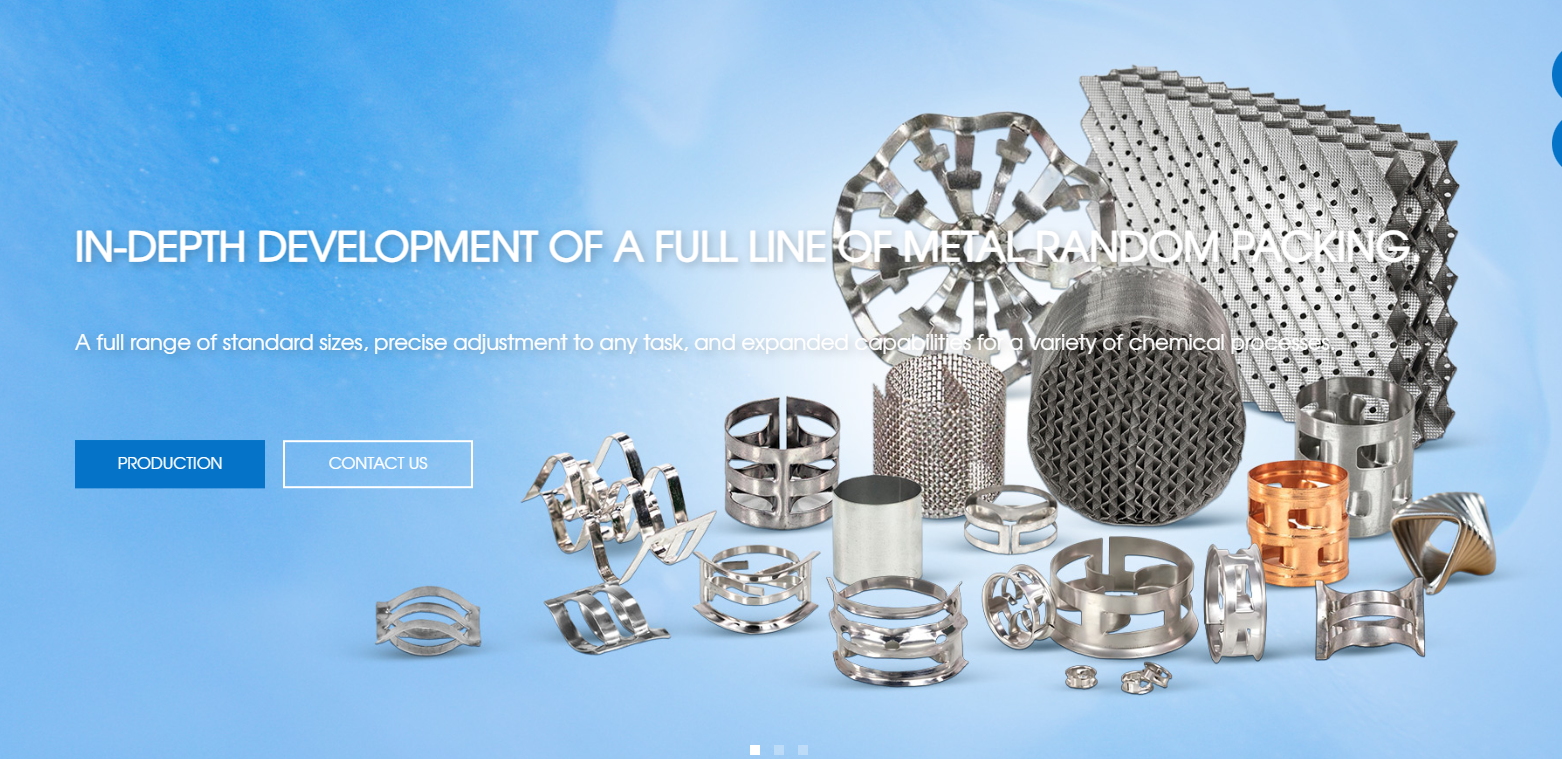
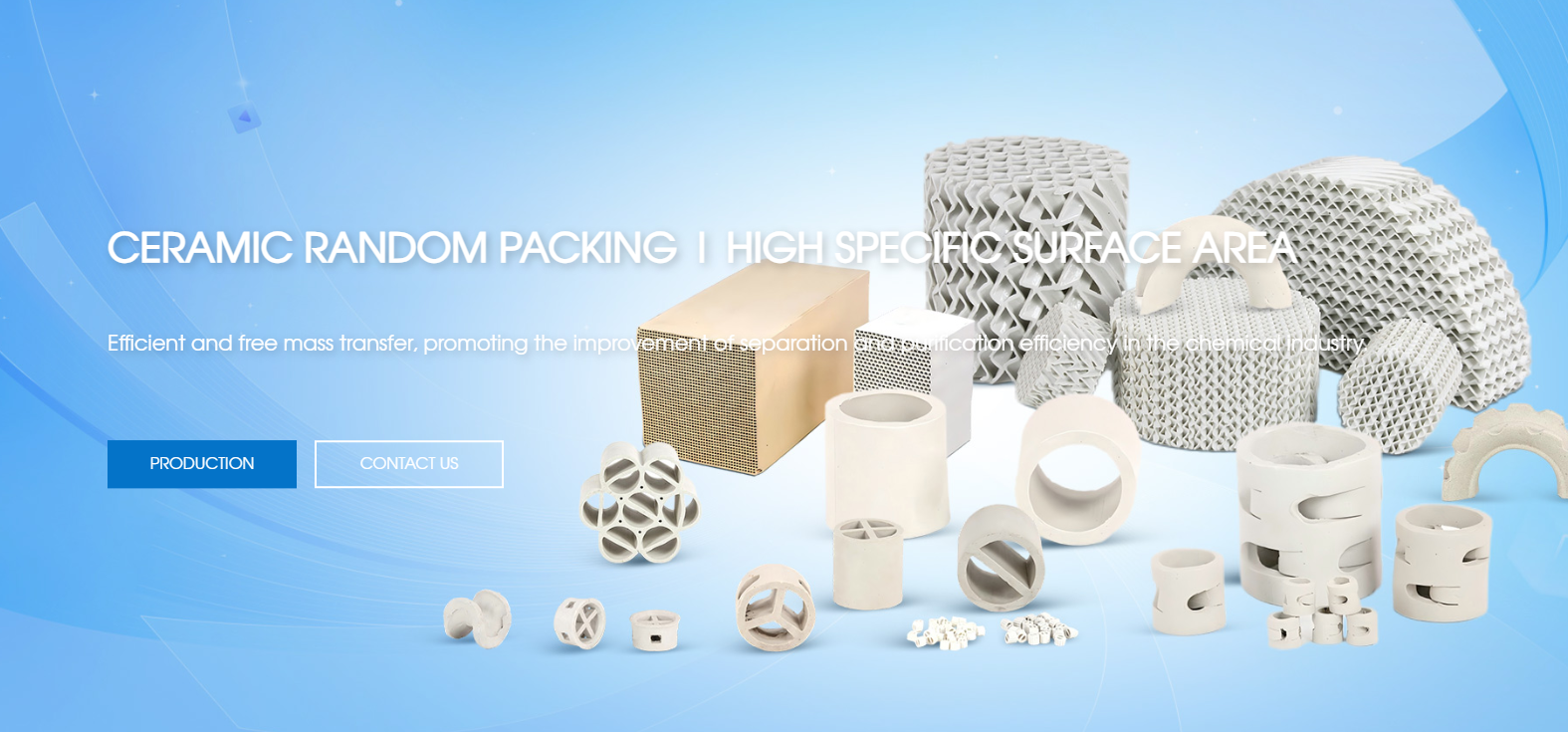
Ceramic, plastic and metal column packings,Inert ceramic balls made of aluminum oxide,RTO honeycomb ceramics,Activated aluminum,Molecular sieve,Carbon Raschig rings,Silica gel, etc.Other new products can be made to order.
The company utilizes Chinese 5G+ manufacturing technologies (RAID+AGV+MES+MEC+WMS+AR) as the core, innovatively integrating German Industry 4.0 automated technology and adding a 5G+MAS system to fully cover the production and operation process, creating a fully automated 5G+ production management system. Currently, the company's main workshop operates 80 automatic production lines, and the production processes of precision molds, sheet metal, stamping, precision die-casting, injection molding, and extrusion are standardized and automated. The annual production capacity is 200,000 cubic meters of mass transfer materials and 10,000 tons of new CPVC materials. It has a new super-large hydraulic testing platform, a cold simulation unit, a VOC exhaust gas simulation unit, and an automatic cleaning line with pickling and degreasing.
Why choose us?
JXKELLEY has continuously strengthened its internal management and has passed the ISO9001:2018 quality system certification, ISO14001:2018 environmental management system certification, and ISO45001:2018 occupational health and safety management system certification. Through continuous reform and innovation, the company boasts strong technical strength, advanced production equipment, and a complete set of quality control measures. Our products are widely used in the electric power, petroleum, chemical, metallurgy, environmental protection, pharmaceutical, aerospace, and aviation industries, and have been exported to the United States, Spain, Japan, Iran, Saudi Arabia, Germany, South Korea, and more than 80 countries and regions worldwide.
website: https://www.jxkelleygroup.com/
email: [email protected]
Media Contact
Jiangxi Kelley Chemical Packing Co., Ltd.
0086-799-6762199
Junction of Jinguang Road and Chongqing Mid-Road, Anyuan Industrial Zone, Anyuan District, Pingxiang City, Jiangxi Province, China, 337000
Source :Jiangxi Kelley Chemical Packing Co., Ltd.
This article was originally published by IssueWire. Read the original article here.
More News


YOUR NEWS, OUR NETWORK.
Do you have Great News you want to tell the world?
Be it updates about your business or your community, you can make sure that it’s heard by submitting your story to our network reaching hundreds of news sites across 6 verticals.